Bize Ulaşın

The Need for Short-Term Auxiliary Backup Power in Compact Energy Monitoring Sites: How to Maintain RTU and SCADA Communication Without a Battery Charger Unit

How can RTU and SCADA communications remain available without a battery charger system?

RTU systems and SCADA field integration solutions are widely used in power distribution networks, pole-mounted transformers, small distribution substations and street-lighting monitoring points. In these compact sites, RTUs, PLCs, modems and communication equipment are typically powered by 12 Vdc, 24 Vdc or 48 Vdc.

The challenge: At locations without a battery charger system, a grid outage completely de-energises the communication panel.
Smart Grids · Technical Feature

A power outage does not have to stop communication.

A short-term auxiliary backup approach that keeps RTU and SCADA communications alive at compact monitoring sites without a battery charger—until critical data reaches the control centre.

Critical 5–10 minute window12 / 24 / 48 VdcMaintenance-free technology
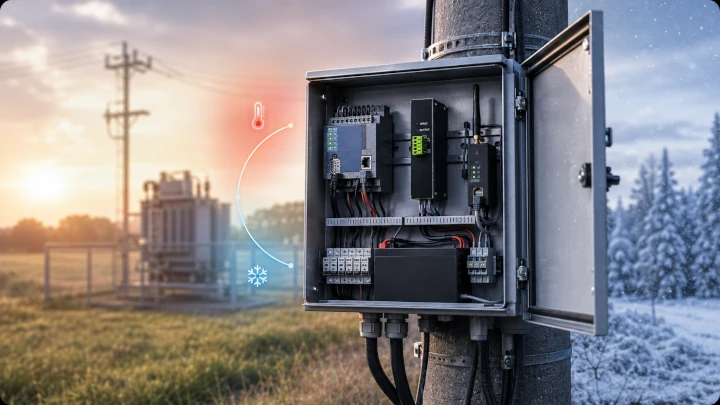
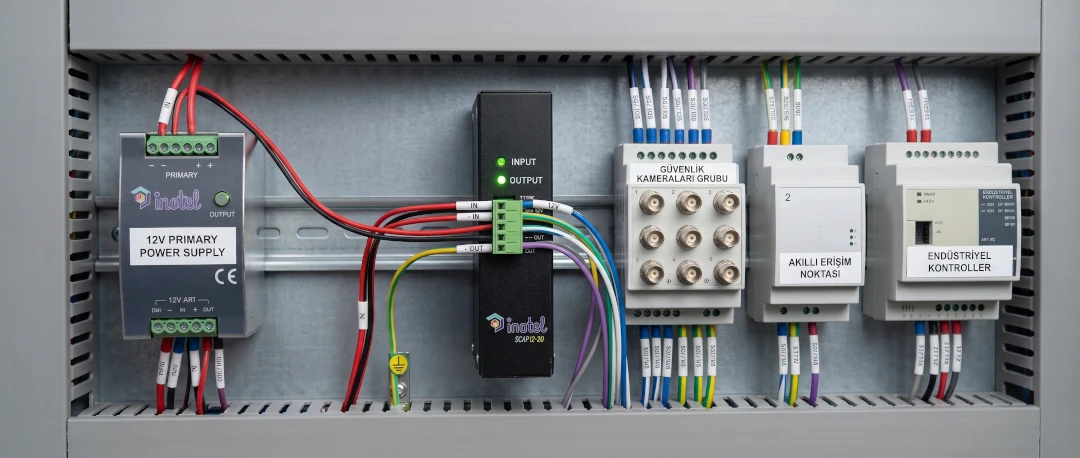
Inotel SCAP in the fieldIMAGE PLACEHOLDER · scapgorseleklenecek1.jpg
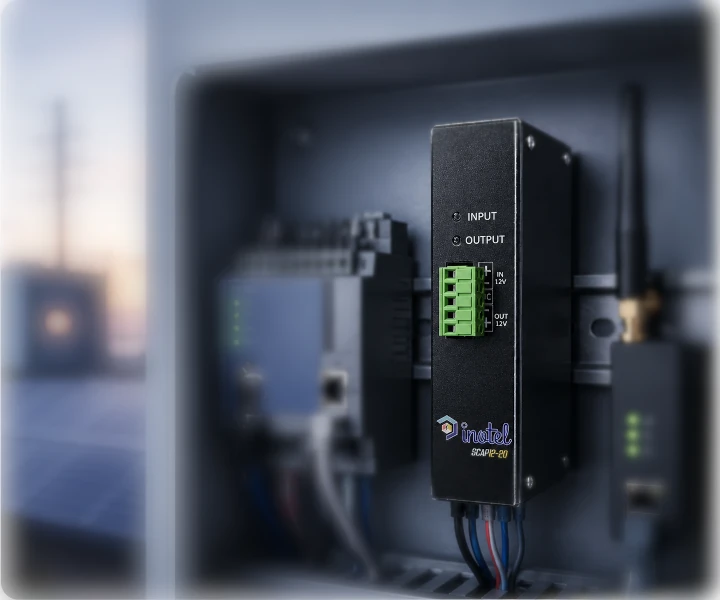
Suggested: compact panel with SCAP, RTU and modem

The real requirement: critical minutes, not hours

In most compact field applications, backup power for hours is not necessary. What matters is allowing RTU and modem devices to send outage information, field alarms and measurement data to the central monitoring system after a grid failure.

  • Transmit the power-outage event to the control centre
  • Send field alarms
  • Preserve and deliver critical measurement data
Note: In many projects, 5–10 minutes of auxiliary backup is sufficient for this objective.
01 · The real requirement

Not hours of energy—just enough time to deliver the data.

At pole-mounted transformers, small distribution centres and street-lighting monitoring points, RTUs, PLCs, modems and communication equipment commonly operate at 12, 24 or 48 Vdc. Without a battery charger system, the communication panel becomes completely de-energised during a grid outage.

The critical task: The RTU and modem must still transmit outage information, field alarms and final measurement data to the SCADA control centre.
ϟ

Report the outage

Notify the control centre promptly when grid power is lost.

!

Complete alarm delivery

Transmit field alarms and event records before communication stops.

Preserve measurements

Gain enough time to send final values and status information.

5–10 minSufficient for many projects
3 data typesOutage · alarm · measurement
1 objectiveSCADA data continuity
Outdoor panel / temperature impactIMAGE PLACEHOLDER · scapgorseleklenecek2.jpg
Suggested: pole-mounted transformer panel and battery-life temperature relationship
02 · Sizing the solution

Why might a battery charger system be excessive at every compact site?

When the requirement is only a few minutes of communication continuity, a battery system designed for hours of operation can create unnecessary investment and maintenance overhead.

  • Additional capital and maintenance cost
  • Large space requirement inside the panel
  • Temperature impact in outdoor enclosures
  • Shortened sealed-battery service life
  • Periodic replacement and communication-gap risk
Especially at pole-mounted transformers: The lack of a concrete enclosure and wide temperature variation may cause batteries to reach end of life much earlier than expected.
03 · The alternative

Supercapacitors instead of batteries: Inotel SCAP.

The Inotel SCAP product family is a supercapacitor-based power supply developed for short-term uninterrupted auxiliary backup in smart-grid infrastructure. It operates in DC systems and keeps critical RTU, PLC and modem loads active for a defined period after grid failure.

Product focus: SCAP is not designed to supply hours of energy. It delivers the right amount of time for critical data to reach the control centre safely.
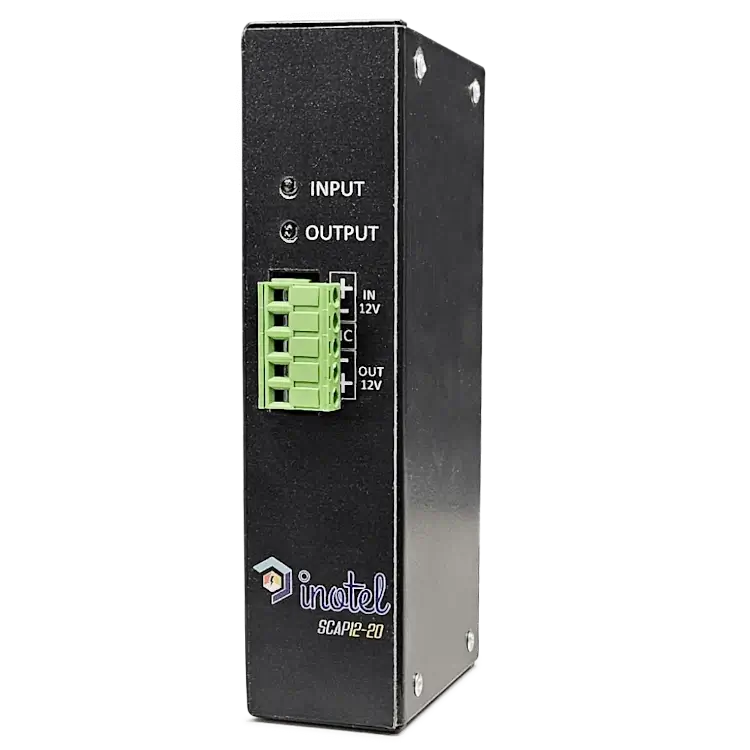
SCAP product visualIMAGE PLACEHOLDER · scapgorseleklenecek3.jpg
Suggested: SCAP 12-20 product photo on a white or light background
12 WConfigurable output power
180 secAt a 3.5 W load
−20…+70 °COperating temperature
SCAP 12-20

Electrical specifications

Input / output12 / 24 / 48 Vdc
Charge currentConstant 0.20 A, configurable
Discharge180 seconds at 3.5 W
MECHANICAL

Field compatibility

MountingDIN rail
ProtectionIP40
MaintenanceNo periodic battery replacement
04 · Operating principle

From the grid to the field—and from outage to completed transmission.

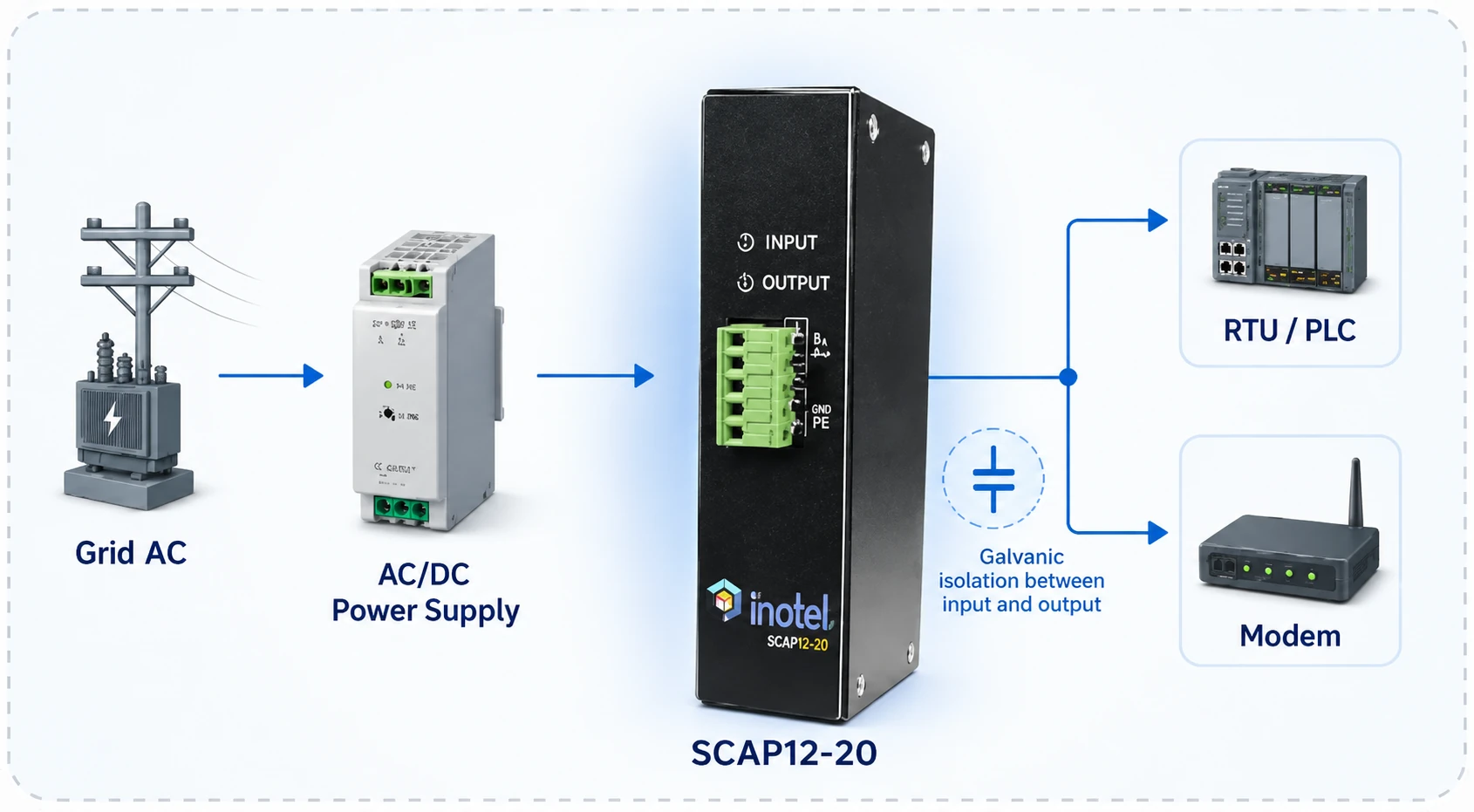
AC supply

220 Vac or 400 Vac is taken from the grid.

DC conversion

An AC/DC converter produces 12, 24 or 48 Vdc.

Parallel connection

SCAP is connected in parallel with the converter’s DC output.

Automatic takeover

When AC fails, SCAP continues powering critical DC loads.

SCAP connection diagramIMAGE PLACEHOLDER · scapgorseleklenecek4.jpg
Suggested: Grid → AC/DC → SCAP → RTU/PLC/Modem block diagram

Result during an outage

RTUs, PLCs, modems and similar critical equipment gain enough time to complete data transmission.


4,000+Long-term active locations across the grid
05 · Selecting the right solution

Do you need hours—or are minutes sufficient?

The backup solution for a compact field site should be sized according to the real duration requirement. Battery systems fit applications that need hours; SCAP stands out when minutes are enough for critical communication.

ComparisonBattery charger systemInotel SCAP
Backup durationHoursMinutes
MaintenanceRequiredNone
Temperature sensitivityHighLow
Periodic replacementRequiredNot required
Space requirementLargeCompact
Total costHigherLower

The right amount of energy for the right duration—no more, no less.

06 · Applications

Where compact auxiliary backup creates value.

Pole-mounted transformers

SCADA sites without a concrete enclosure or space for a large battery system.

Small distribution centres

Compact substations where RTU and modem communication is critical.

Street-lighting monitoring

Points that must report outage and alarm information to the centre.

SCADA integration

Systems where field data must reach the control centre after a power failure.

R

RTU panels

Panels containing 12, 24 or 48 Vdc communication equipment.

P

PLC communications

Panels that need short-term DC power to complete event and data transfer.

07 · Data continuity

SCAP is not a UPS—it solves the critical part of the requirement.

SCAP does not supply power for hours. It provides enough time to transmit outage information, field alarms and measurement data, improving operational awareness, fault-response speed and grid reliability.

Conclusion: Maintenance-free, compact and long-lived, SCAP is optimised for short-term auxiliary backup in RTU systems, PLC panels, SCADA systems and pole-mounted transformer applications.