- info@inotelelk.com
- Ostim OSB Mah. Turan Çiğdem Cad. No: 7/1 06374 Yenimahalle / Ankara
As electric vehicles become increasingly widespread, charging methods are among the most frequently discussed topics. AC charging stations, commonly found in homes, workplaces, and public areas, have become an essential part of everyday life for electric vehicle owners. So, what exactly is an AC charging station, how does it work, and what role will it play in the future of transportation?
AC stands for “Alternating Current,” the standard type of electrical current used in homes and workplaces. Electric vehicles require a specific technology to use this energy for charging their batteries: AC charging technology. The answer to the question “What is AC charging?” lies in how this technology works.
From a technical perspective, AC (Alternating Current) charging involves supplying power from the electrical grid directly to the vehicle. However, there is one important distinction: electric vehicle batteries can only be charged with DC (Direct Current).
For this reason, an AC charging station functions less as a power conversion device and more as an access point or charging interface that manages the power supplied by the grid. AC electricity from the grid is delivered to the vehicle through the charging station, where the vehicle’s built-in on-board charger (OBC) converts it into DC power before supplying it to the battery.
This operating principle makes an AC EV charging station particularly important for two main reasons:
Accessibility and Cost: AC electrical infrastructure is widely available. Compared with DC charging units, AC charging stations are considerably more cost-effective to manufacture and install.
Battery Health: AC charging, commonly associated with slower charging, generally supplies power at lower levels than DC fast charging. This produces less heat and places less thermal stress on the battery, making AC charging well suited to regular and overnight charging.
Differences Between AC and DC EV Charging: AC charging stations generally operate at lower power levels, resulting in longer charging times than DC charging stations. However, this should not necessarily be considered a disadvantage; rather, each charging method is designed for different use cases.
AC charging systems are particularly suitable for everyday charging, residential and workplace parking areas, and locations where vehicles remain parked for extended periods. DC charging, on the other hand, provides much faster charging but requires more expensive equipment and higher-capacity electrical infrastructure. For this reason, it is commonly preferred at highway charging points, service areas, and other locations where rapid charging is required.
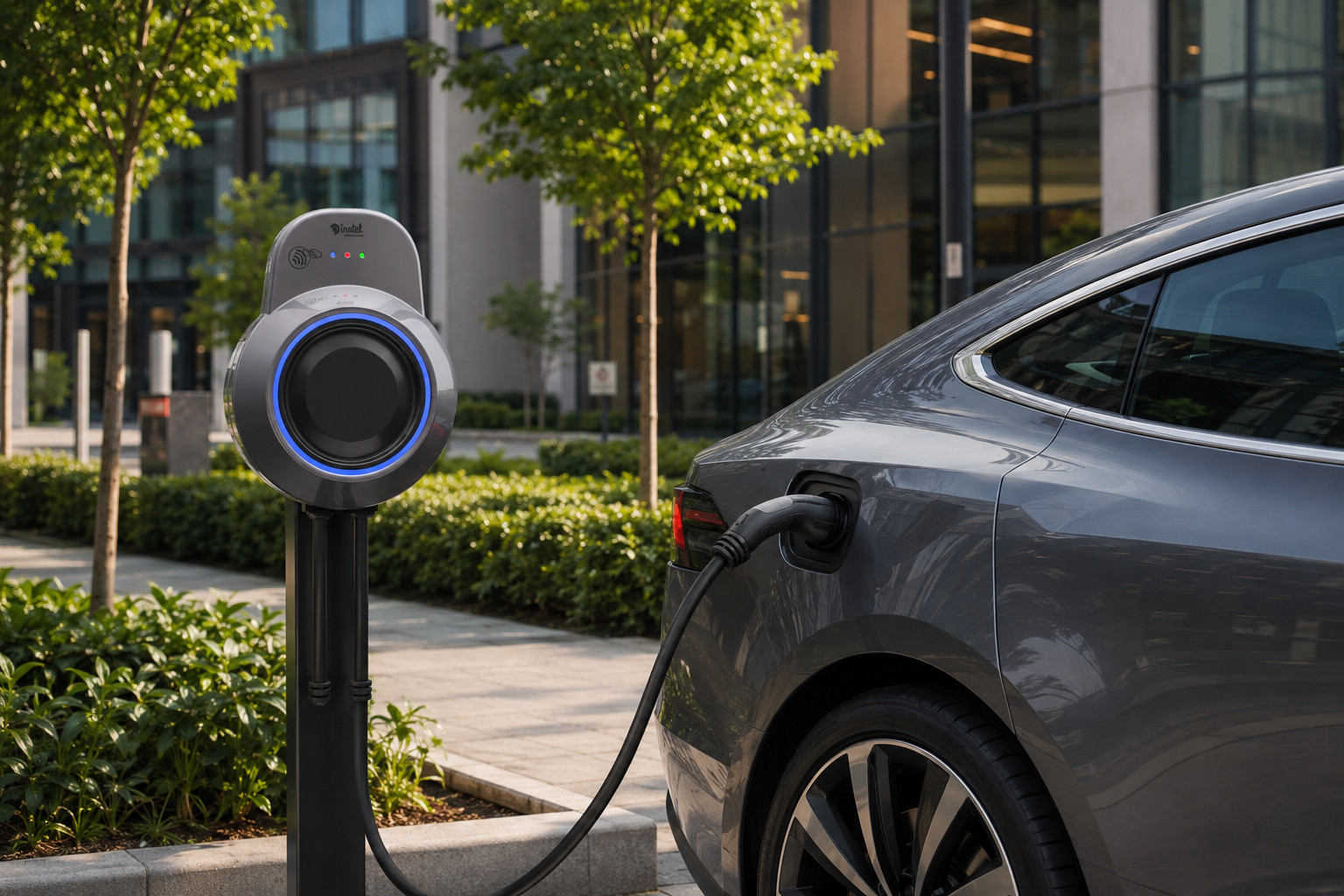
AC EV charging stations are among the most practical and accessible solutions for meeting the everyday charging needs of electric vehicle users. With the right infrastructure, appropriate charging equipment, and sustainable charging habits, it is possible to make a meaningful difference at both individual and societal levels.
As electric vehicles become increasingly widespread, investments in AC charging infrastructure are shaping not only today’s mobility landscape but also the future of transportation.
The term AC charger covers charging equipment with different power ratings. Charging speed depends primarily on the power supplied by the charging station and the maximum charging capacity of the vehicle’s on-board charger (OBC), both measured in kilowatts (kW).
| Charging Type | Voltage (Türkiye) | Power Range (kW) | Typical Applications |
|---|---|---|---|
| Single-Phase AC | 220V - 240V | 3.7 kW - 7.4 kW | Homes, small businesses, overnight charging |
| Three-Phase AC | 380V - 400V | 11 kW - 22 kW | Workplaces, shopping centers, residential complexes, public areas |
The performance of a 22 kW AC charging station will be limited to 11 kW if the vehicle has a maximum on-board charging capacity of 11 kW. This is one of the most important technical aspects to understand about AC charging.
Some AC charging devices offer adjustable power settings, allowing them to operate at different power levels according to the available electrical infrastructure and the vehicle’s charging capacity. INOCHARGE is an AC EV charger with adjustable power settings designed to support these different charging requirements.
AC charging time depends on the power output of the charging station and the battery capacity of the vehicle. In general:
3.7 kW AC charger → Approximately 12–14 hours for a 40–50 kWh battery
7.4 kW AC charger → Approximately 6–8 hours for the same battery capacity
11 kW–22 kW AC chargers → A full charge may be possible within approximately 2–4 hours, depending on the vehicle’s battery capacity and maximum AC charging rate.
These charging times refer to charging a battery from fully depleted to 100%. In everyday use, however, drivers typically do not need to charge the battery through its entire capacity, and charging within a more limited range, such as 20% to 80%, is often sufficient.
Connector Type: Type 2 (Mennekes) connectors are commonly used for AC EV charging.
Safety Features: Protection against overcurrent, residual current (leakage current), and short circuits.
User Interface: Some models support RFID card access, mobile app connectivity, or an integrated display.
Installation Type: Available as wall-mounted (wallbox) or pedestal-mounted charging stations.
Installing an AC EV charging station is considerably simpler than installing a DC charging station, but it still requires a professional approach.
Electrical Infrastructure Assessment: Before installation, it is essential to determine whether the electrical supply at the installation site is single-phase or three-phase and whether the existing electrical panel and infrastructure can safely handle the additional load. A 22 kW AC charging station can create a significant power demand and therefore requires proper electrical capacity assessment.
Management System: If you are installing an AC EV charging station for public use, a smart charging management system may be required for remote monitoring and management, payment system integration, and fault detection. Communication protocols such as OCPP (Open Charge Point Protocol) are commonly used to enable communication between charging stations and central management platforms.
Safety Standards: Charging equipment should have appropriate IP and IK ratings to provide protection against water, dust, and mechanical impact. Devices should also comply with applicable national and international standards and certification requirements, such as CE requirements and relevant TSE standards in Türkiye.
Although many people view DC fast charging as the only solution for the future, AC charging stations will continue to form a fundamental part of the electric vehicle charging ecosystem.
The “Park and Charge” concept is at the heart of AC charging. Vehicles often remain parked for extended periods at home, at work, in shopping centers, gyms, and other destinations. These longer parking periods provide an ideal opportunity to charge efficiently without relying on higher-cost DC fast charging infrastructure, while also reducing peak power requirements and making better use of existing electrical infrastructure.
Ultimately, the answer to “What is AC charging?” goes beyond a technical definition. AC charging represents one of the most practical and sustainable approaches to everyday electric vehicle charging. Choosing the right **AC EV charger** therefore requires considering your vehicle’s maximum AC charging capacity, daily driving habits, available electrical infrastructure, and typical parking duration.