A silent insulation fault at a solar power plant was detected and resolved thanks to the IMD100—without stopping the inverters or damaging any equipment. And why could a residual current device never detect it?
In solar PV systems operating at an 800 V AC voltage level, the network topology is predominantly an IT (ungrounded) configuration. This means the transformer neutral is not connected to the operational ground.
In TT networks (residential, commercial buildings), when a conductor's insulation is damaged, a residual current occurs and the Residual Current Device (RCD) detects it instantly. In IT networks, however, this mechanism does not work—a single insulation fault does not generate a residual current.
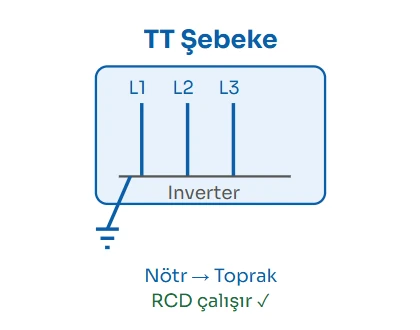
Neutral is grounded. An insulation fault generates residual current, and the RCD trips the circuit.
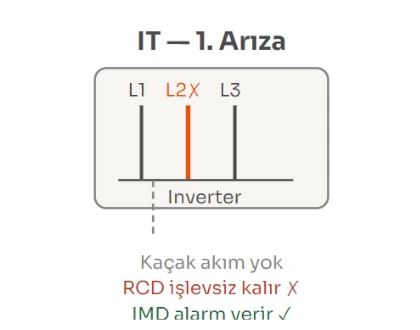
Neutral is isolated. No residual current during a single-phase fault. Only an IMD can detect it.
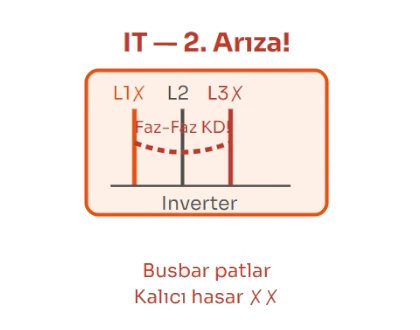
When the second phase is also damaged, a phase-to-phase short circuit occurs. Explosion, permanent damage, complete shutdown.
Solution: Insulation Monitoring Device (IMD) — The only solution to close this gap where residual current devices remain ineffective in IT networks is an IMD, which continuously measures the insulation resistance between live conductors and ground. It detects the first fault without shutting down the facility, giving the maintenance team time to respond.
Continuous insulation resistance measurement in 800 V AC IT networks - Two-stage alarm outputs - Modbus Communication - DIN rail mounting - Field-proven success
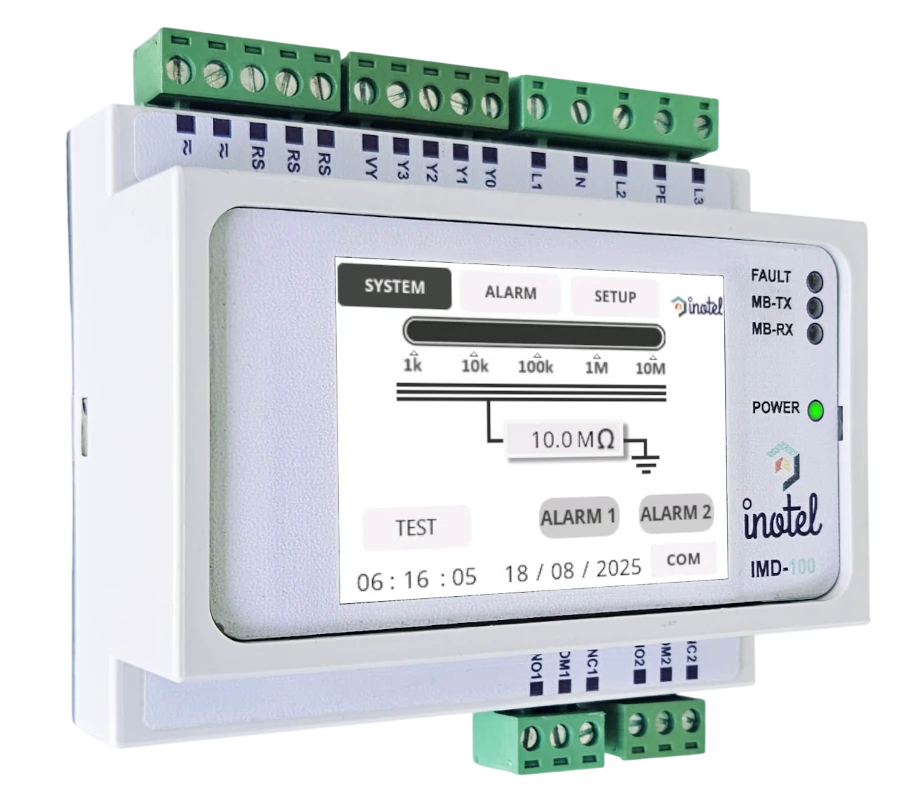

At a solar PV plant consisting of 800 Vac string inverters, the long-installed IMD100 began recording an unusual drop in insulation resistance measurements at the beginning of April.
The IMD100 detected that the system insulation resistance was persistently below 20 kΩ. It remained low regardless of day or night, and independent of climatic conditions such as rain, snow, or humidity. This indicated physical insulation degradation.
Insulation resistance continued to decline. The inverters took longer to turn on in the morning, waiting more than usual; however, they eventually booted up and the plant continued to generate power.
The resistance dropped below 4 kΩ. Startup times lengthened progressively; at the most critical stage, the inverters could only activate after very long standby periods.
Following the continuous warning from the IMD100, the maintenance team physically located and repaired the insulation damage on the busbar between the transformer and the LV panel. No equipment suffered permanent damage.
These photographs show the outcomes in cases where insulation faults went undetected and escalated. The IMD100 detects these conditions at their very onset.
In IT networks, residual current devices cannot detect insulation degradation. Without an IMD device, or if the alarm is ignored, damages similar to those below become inevitable.
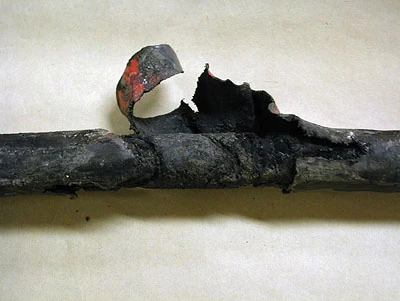
Undetected insulation damage has caused the cable to burn completely.
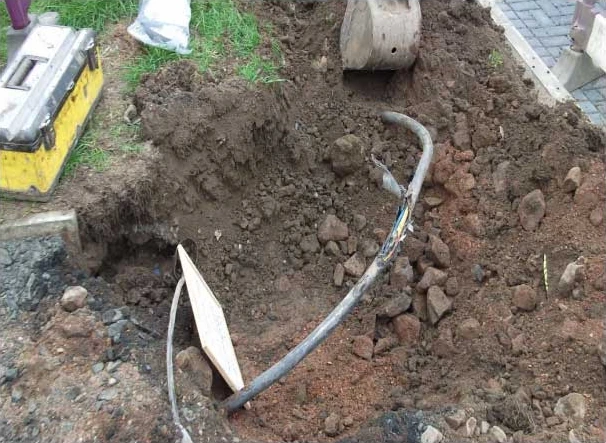
Damage to underground cables caused by external factors.
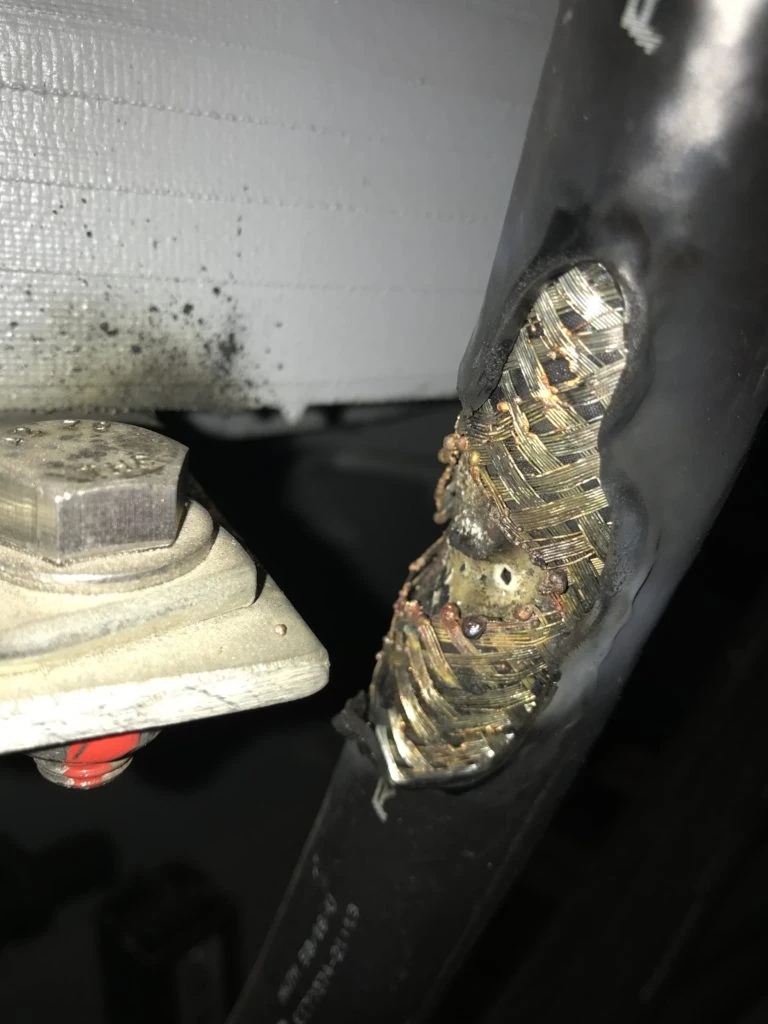
Melting and burning in conductors where insulation degradation has escalated. The IMD prevents this outcome prior to a short circuit.
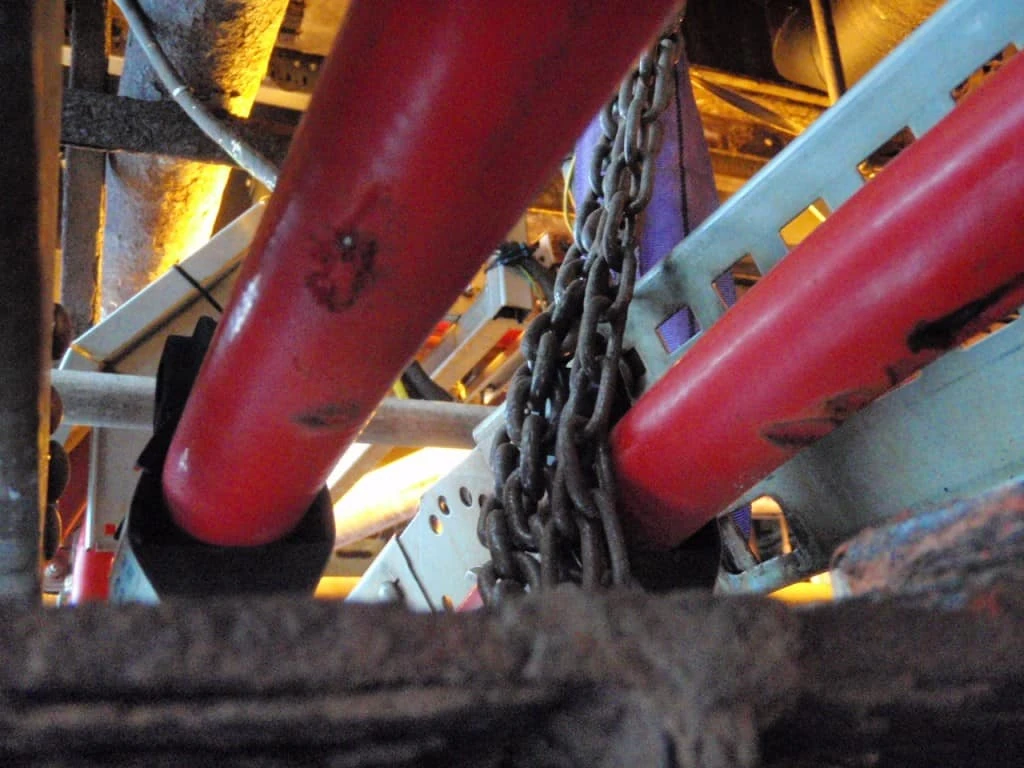
In solar PV plants, mechanical stress and environmental factors lay the groundwork for insulation degradation over time.
Insulation damage progressing on one phase could eventually affect another phase over time. The moment conduction began between the two phases, a phase-to-phase short circuit would be inevitable.
In IT networks, a first insulation fault is not dangerous unless a second phase is also damaged. If the IMD were to trip and shut down the plant at the first alarm, the plant would have been unnecessarily offline for 3 weeks in this case.
The IMD triggers an alarm, and the maintenance team takes action. The plant continues operating. The fault is resolved.
If the IMD is wired to trip: The plant shuts down at the first drop in insulation, causing unnecessary production loss.
If the alarm is ignored and a second phase is also damaged—a short-circuit fault can occur at this point in the facility.
Both production continuity and safety are optimized. The alarm → intervention → solution chain works seamlessly.
In solar PV plants with IT networks, the next busbar fault can grow silently without an IMD. A residual current device cannot detect this. Contact us for technical details, installation, and integration of the IMD100.
Request technical info →